
Specialist vs. General Dentist
Why See a Specialist?
Plenty of dental offices will put braces or clear aligners on your teeth. Far fewer are run by an orthodontist. The difference affects your results and what happens when a case gets complicated. Here is what actually separates a specialist from a general dentist who offers orthodontics on the side.
Board-Certified Orthodontist
- 2–3 years of orthodontic residency
- Orthodontics only — full time
- Voluntary board certification
- Thousands of orthodontic cases
- In-office CBCT & digital scanning
- Pattern recognition from case volume
General Dentist Offering Braces
- No orthodontic residency
- Orthodontics alongside fillings & cleanings
- No specialty board certification
- Lower orthodontic case volume
- May lack in-office imaging
- Less exposure to complex cases
01
What makes someone an orthodontist
Every orthodontist starts as a dentist. The difference is what comes after. Following dental school, an orthodontist completes two to three years of full-time residency that focuses only on how teeth move and how bites and jaws develop. It is a separate accredited specialty, the same way a cardiologist is more than a doctor who took an interest in hearts.
Dr. Asbita finished that residency at the University of Connecticut, then earned board certification from the American Board of Orthodontics, which most orthodontists never do. A general dentist has none of this extra training, no matter how the website is worded.
02
Why a general dentist who offers braces is not the same
A general dentist can legally provide some orthodontic treatment, and many advertise clear aligners. The catch is that orthodontics is a sliver of their day. They are also doing fillings, crowns, cleanings, and root canals, and they may have picked up aligners in a short course rather than a residency.
When a problem comes up mid-treatment, and it will, you want the person guiding your care to have seen it hundreds of times before. An orthodontist does this all day, every day. That is not a small advantage. It is the whole point.
03
What makes someone an orthodontist
Tooth movement looks simple from the outside and is not. Roots can resorb. A bite that looks fine on day one can drift in a direction the untrained eye misses until it is hard to fix.
A specialist has the case volume to spot trouble early and change course before it costs you months. That kind of pattern recognition only comes from doing thousands of cases, and it is the quiet reason specialist results tend to hold up better over time.
04
Specialists catch what others miss
Good orthodontics starts with an accurate diagnosis. Dr. Asbita uses in-office 3D imaging to see what is happening below the gumline, which matters for impacted or missing teeth and for growth problems in children that a quick exam will not catch. Finding these early changes the plan, and sometimes it changes everything. A provider who only treats the surface cannot give you that.
05
A straight answer on airway and expansion
This is where the gap shows most. Some offices — often general dentists — heavily market expansion and airway treatment, occasionally to children barely past their second birthday, well beyond what current research supports. It sells. That does not make it good medicine.
Dr. Asbita will give you an honest, conservative read grounded in the evidence. If expansion or airway-focused treatment genuinely helps your child, he will recommend it and explain why. If it is being oversold, he will tell you that instead of selling it to you.
06
Seeing a specialist usually costs about what you expect
A lot of families assume a specialist is the expensive option. Often it is not. The fees are frequently in the same range as a general dentist offering the same treatment, and Asbita Orthodontics keeps care affordable with flexible payment plans. You are not paying a premium for the expertise. You are simply getting it.
07
It matters most for your kids
Many parents will happily see a general dentist themselves and still want a specialist for their children. That instinct is right. Childhood is when the jaws are still growing and timing matters, so the window to guide that growth is narrow and easy to miss. Getting it right early can mean simpler treatment later, or avoiding a problem altogether.
08
How to tell who you are really seeing
Before you commit anywhere, ask one question. Is the doctor a board-certified orthodontist who practices orthodontics full time? If the answer is anything else, you are not seeing a specialist, whatever the sign out front says. At Asbita Orthodontics, the answer is yes, every time.
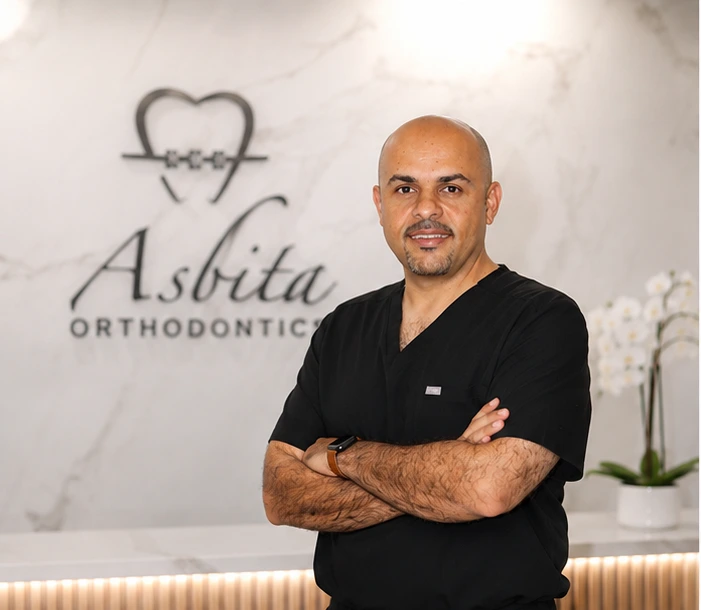
Dr. Asbita
Board-certified orthodontist. University of Connecticut residency. Practicing orthodontics full time in Hockley, TX.
Get Started
Ready for a Healthier, More Confident Smile?
Schedule your free consultation today. No pressure. No obligation. Just a warm conversation about your smile.